Mountain
Montserrat with Limited Walking: Railway, Funicular and Viewpoints
Build a lower-effort Montserrat day around the adapted rack railway, sanctuary-level stops and an honest access check before the Sant Joan funicular.
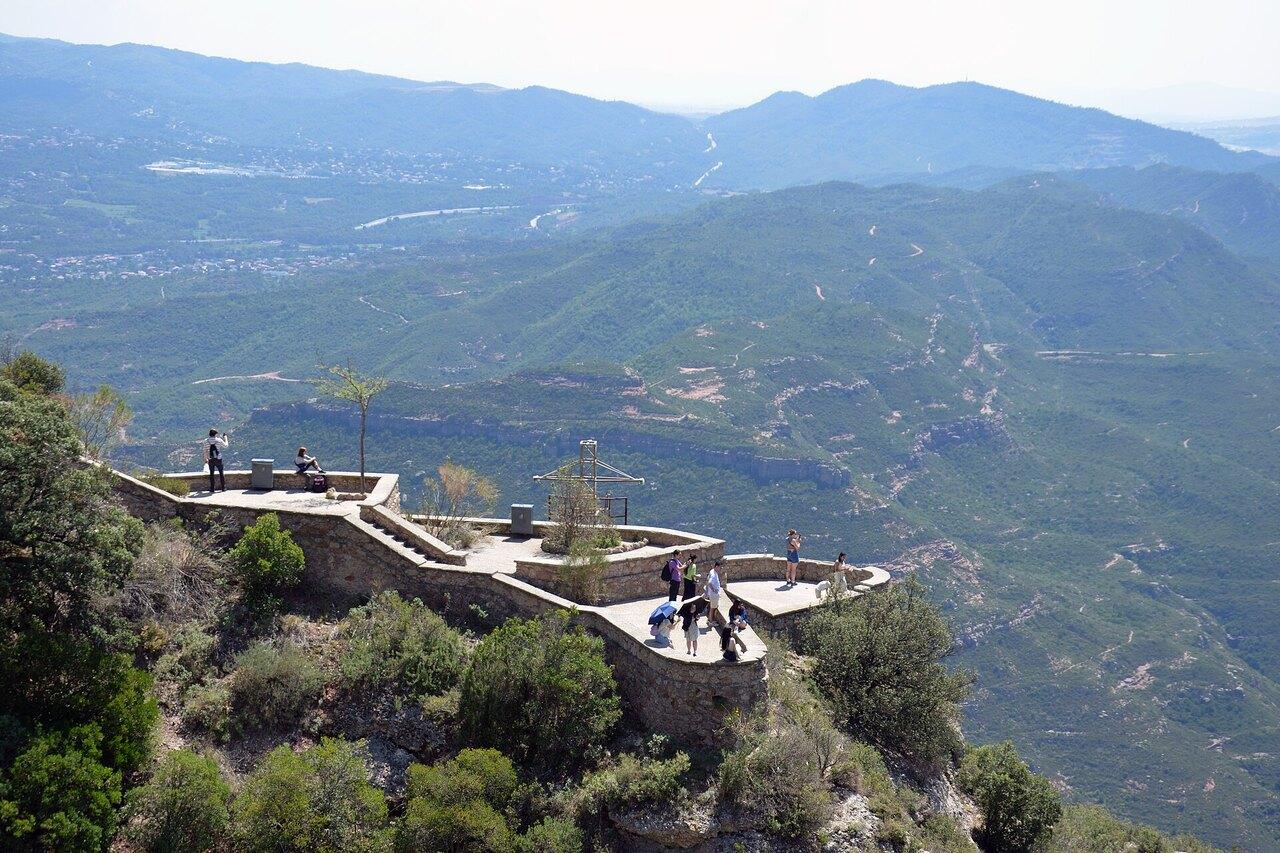
“Limited walking” at Montserrat can mean two very different days. One traveler may need adapted transport and step-free transfers. Another can manage short slopes and a few station movements but not a mountain path. The rack railway serves both needs; the Sant Joan funicular can add an adapted uplift, but it does not make every space beyond its doors step-free or low-effort.
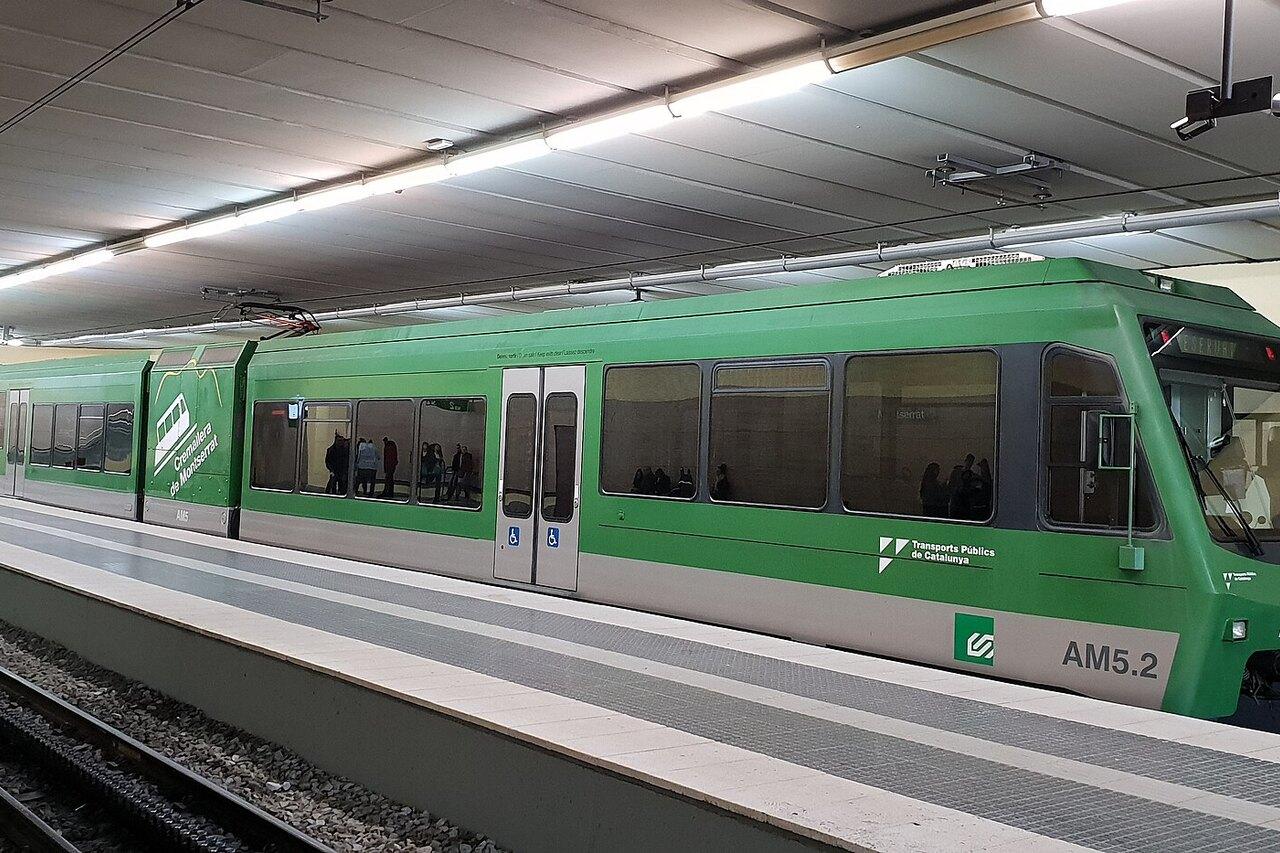
Use the Cremallera de Montserrat as the reliable core. It reaches the sanctuary level without the cable-car boarding or a drive up the mountain, and FGC states that its stations and trains are adapted for people with reduced mobility. Current FGC information also lists Sant Joan and its stations as adapted. Add it only after confirming the traveler’s boarding needs, queue tolerance and the useful area available at the upper station. The viewpoint is optional; the railway, basilica precinct and valley edge already make a complete mountain day.
Choose the day that matches the traveler
| Version | Best for | Main limit |
|---|---|---|
| Sanctuary level | Wheelchair user, rollator user, low stamina or uncertain balance after an exact access check | Gradients, crowds and the detailed route between station, basilica and indoor spaces still need confirmation |
| Sanctuary plus Sant Joan | Someone for whom staff confirm the adapted boarding route and who can tolerate a queue or arrange the necessary assistance | The upper station is exposed to mountain weather; adapted transport does not certify every onward path |
| Car to Monistrol Vila plus rack railway | A driver who wants to remove the Barcelona rail transfer | The group still depends on the final rack-railway timetable |
| Barcelona R5 plus rack railway | A car-free traveler comfortable with a mainline train and one planned interchange | Plaça Espanya can add a long station transfer before the mountain day begins |
Allow six to eight hours from Barcelona, even though the train-and-rack journey is advertised at roughly 90 minutes each way. On the mountain, plan three to four hours with generous seated pauses. A realistic planning allowance is €50–€80 per adult for the Barcelona transport chain and selected visitor admissions, before lunch; price the exact combination in the official ticket shop because a bundled funicular is poor value if the traveler cannot use it.
Do not use this guide as an accessibility guarantee. Contact the rack railway and Montserrat visitor service with the mobility aid’s dimensions, boarding needs and desired interiors. “Reduced mobility,” “limited walking” and “step-free” are not interchangeable descriptions.
The Cremallera removes the road, not every transfer
From Barcelona, take the FGC R5 from Plaça Espanya and connect at Monistrol de Montserrat for the rack railway. Check that the itinerary actually names the rack-rail interchange: the preceding stop, Aeri de Montserrat, connects with the cable car and is not the low-uncertainty choice developed here.
The official rack-rail directions describe a 15-minute ascent over five kilometres and a rise of more than 600 metres. For a group arriving by car, Monistrol Vila has a large free customer car park and avoids both central Barcelona and the mountain road. That hybrid—car to Monistrol Vila, then rack railway—is often the calmest option when a passenger needs a known seat, mobility equipment in the boot or a direct return to accommodation.
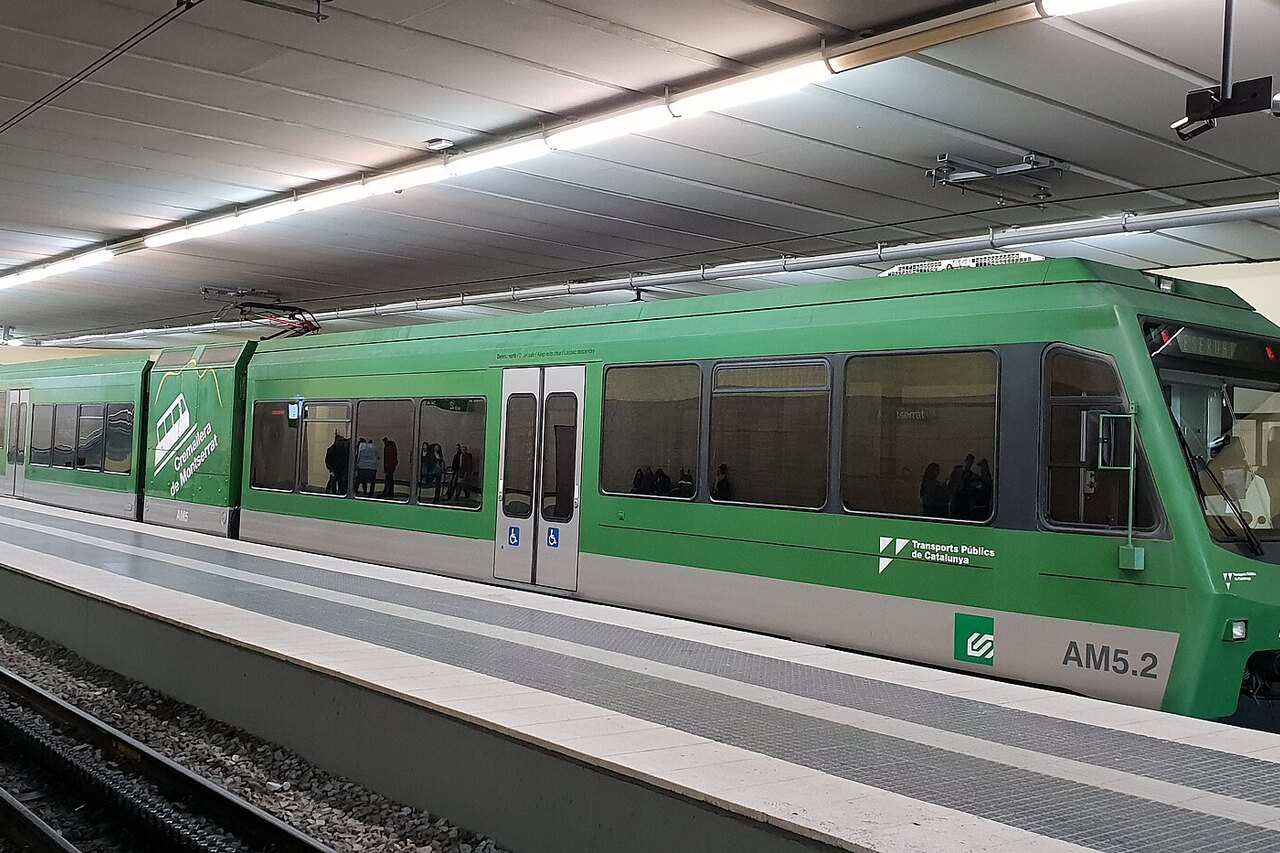
FGC’s current tourist-train accessibility FAQ says the rack railway, Sant Joan funicular and their stations are adapted for people with reduced mobility; it lists the Santa Cova cars and station as not adapted. Ask where staff assistance is available, how boarding works on the intended service and which entrance should be used. Travelers who cannot tolerate standing should also ask about the likely queue and whether a seat can be expected; an adapted vehicle is not a guaranteed empty vehicle.
Save both the last practical descent and one earlier departure. The earlier train is the real target. A lift delay, toilet stop or crowded platform should not turn the final service into the only way down.
Montserrat Monestir: make one level do most of the work
On arrival, pause inside the station rather than following the crowd uphill. Identify the return platform, toilets, information point and the gentlest signed line toward Plaça de Santa Maria. Ask staff for the current low-step route before committing to a queue; building works, religious services and crowd controls can change how the complex is crossed.
A workable low-walking sequence is:
- rack-railway arrival and an orientation pause;
- Plaça de Santa Maria and the basilica at a reserved or quiet visitor time;
- a seated café or indoor break;
- either the museum/audiovisual space or a nearby valley-facing terrace;
- Sant Joan only if access and weather have both been cleared;
- return to the rack station with one service in reserve.
The sanctuary is an active religious place. A tourist ticket governs visitor access, while worship and pastoral use continue around it. The official opening-hours page separates basilica, throne, museum, audiovisual space and food-service hours. Choose one interior that matters instead of buying several admissions and then spending the day in lines.
The throne of Our Lady should not be assumed to follow the same easy route as the basilica floor. Before buying that option, ask about lifts, steps, queue length and where a companion can wait. The same rule applies to the museum: confirm its current entrance route and available seating for the individual visitor.
For an outdoor view without a mountain walk, ask for the most direct current route toward the Mirador dels Apòstols side. The useful outcome is a valley-facing pause near the developed precinct, not reaching a particular railing. If the surface, gradient or crowd becomes uncomfortable, stop at the first safe open view and return by the same line.
Sant Joan is a seven-minute ride with an access decision attached
The Sant Joan funicular climbs from the sanctuary to Pla de les Taràntules, close to 1,000 metres above sea level. The official funicular page gives a seven-minute journey, a maximum gradient of 65.5%, views from the upper area and a Nature Centre in the top-station building. That makes it a powerful scenic lift for a person who can use it; it does not make the mountain accessible by default.
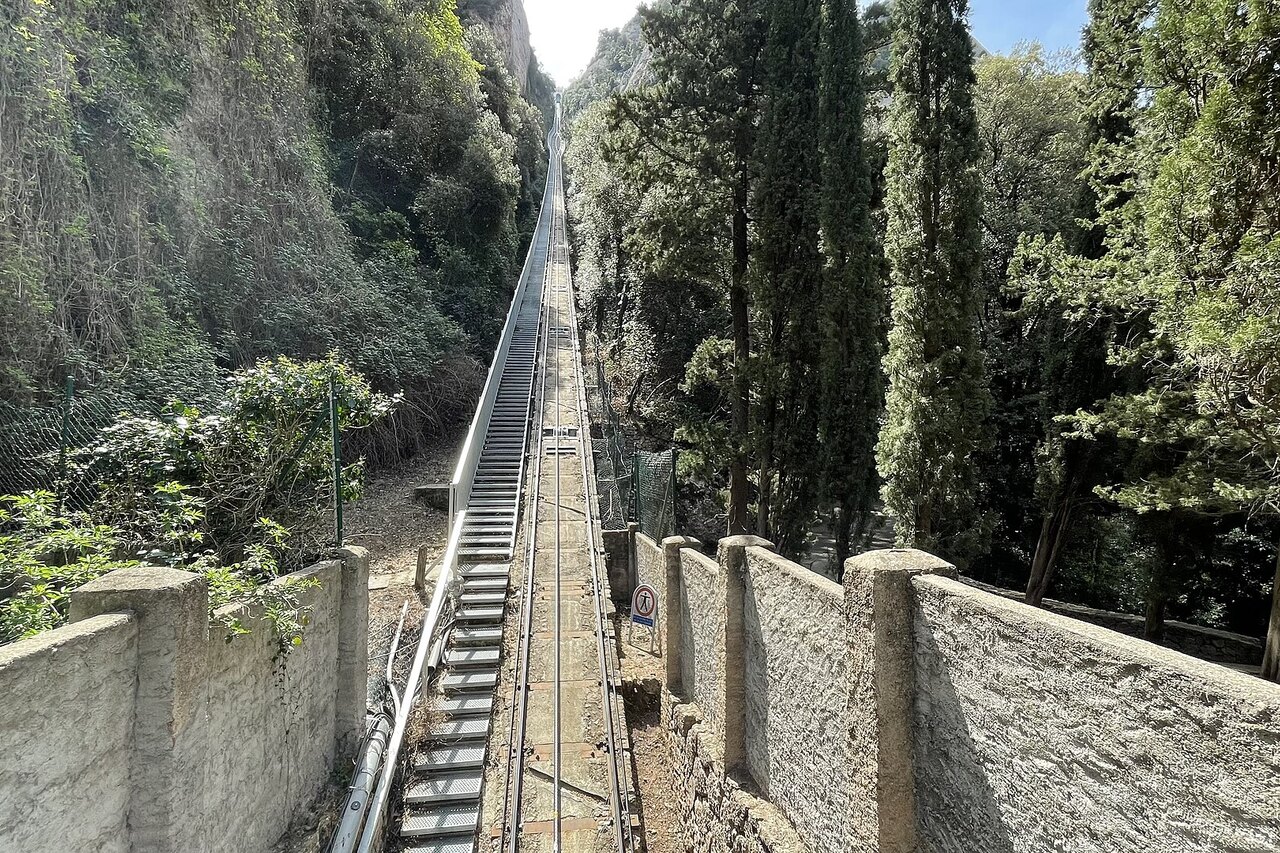
Before purchasing, describe the actual limitation to staff. Ask:
- Are there steps, gaps or steep boarding movements on today’s route through both stations?
- Can the mobility aid travel, and is there space to keep it with the passenger?
- Is seating available or must the traveler remain standing?
- How far and on what surface is the immediate viewpoint or Nature Centre from the upper carriage door?
- When is the last descent, and is there a planned maintenance interruption?
The official FGC fare page lists a 2026 adult return on Sant Joan at €17.50, with seasonal operating hours. Treat that as a dated benchmark, not a promise for another travel year. Funicular boarding is by queue and capacity rather than a reserved departure, so a long wait may erase the energy the ride was meant to save.
At the top, do not drift onto a hiking path to improve the panorama. The Nature Centre and the immediate station area are the objective. Wind, cloud, heat or wet paving can make a very short outdoor movement more demanding than the calm conditions below suggested. Descend while the traveler is still comfortable, not when fatigue has already made boarding harder.
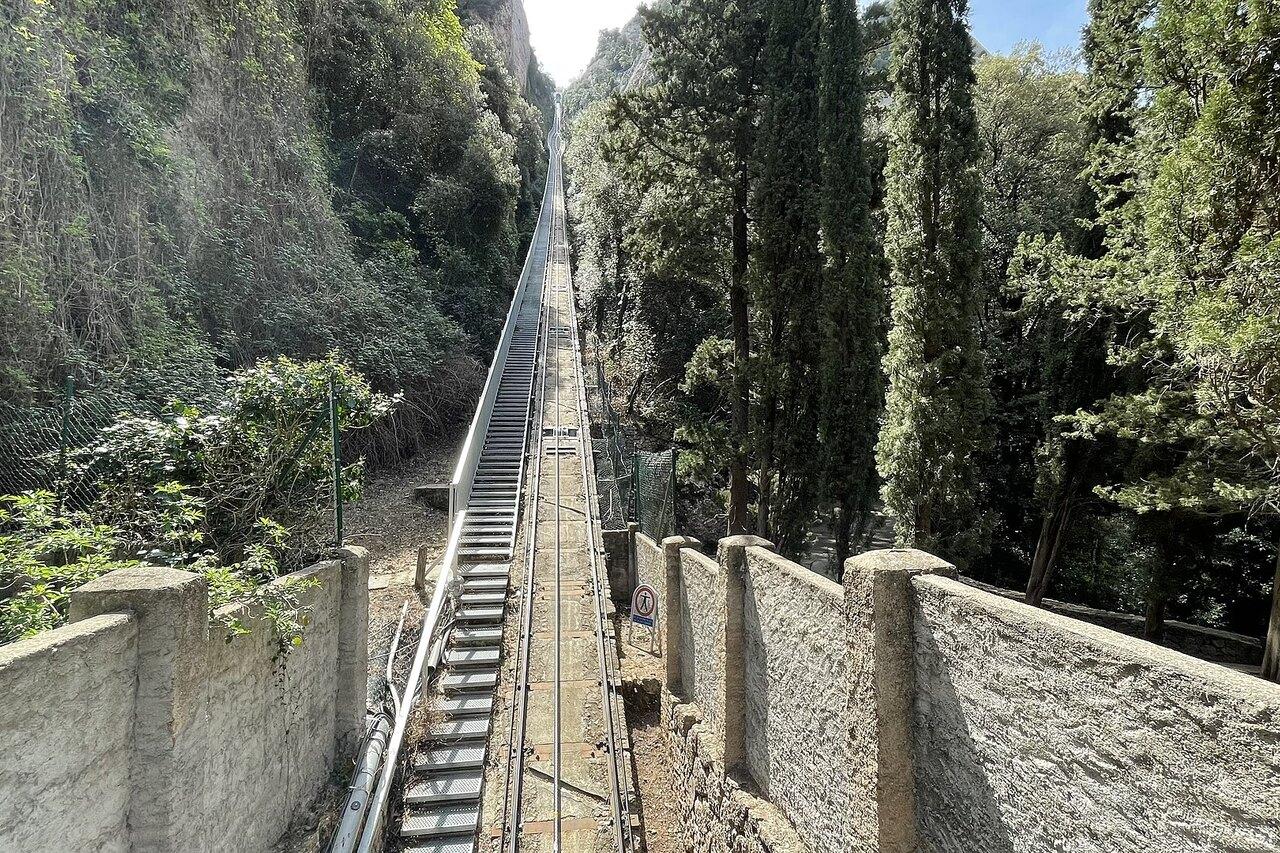
Santa Cova is not the second easy viewpoint
The lower Santa Cova funicular is easy to misread on a map. Its lower station is not the cave itself; reaching the Holy Grotto still involves an outdoor route from the funicular. More importantly, the official Montserrat page currently marks the Santa Cova line out of service until further notice.
Do not buy a day around it or treat its reopening as assured. Even after service resumes, its non-adapted status and the onward walking must be checked independently. For this low-walking plan, Sant Joan and Santa Cova are alternatives with different consequences—not two rides to collect.
If Sant Joan is unsuitable or closed, use the energy for the sanctuary level: one meaningful interior, a long seated lunch and the valley edge. That is a better mountain day than reaching an upper station that the traveler cannot comfortably leave or reboard.
Weather decides whether the upper ride adds anything
Read the mountain forecast and Montserrat webcam before leaving Barcelona. The sanctuary can sit in cloud while the plain is clear, and the Sant Joan area is higher and more exposed. Carry a warm layer and rain protection even when the day starts mild.
Low cloud does not automatically cancel Montserrat. It changes the order: prioritize the basilica, museum or audiovisual space and wait to see whether the rock towers emerge. Strong wind, electrical storms, ice or a maintenance notice are different. Remove the upper funicular rather than asking a limited-mobility traveler to negotiate an exposed station area for no view.
The descent plan remains the same in good weather and bad. Return to Montserrat Monestir early, board the adapted rack railway and make the known connection at Monistrol. A successful low-walking day is not measured by metres climbed after the train stops; it is measured by whether the traveler saw the mountain without borrowing effort from the journey home.
Related guides
- Pedraforca Hiking Routes: Choose a View Walk, Circuit or Summit
Choose the right Pedraforca day by comparing a moderate Saldes viewpoint circuit, the full mountain circuit, and the technical summit.
- Tossal de la Baltasana from Prades: A Forest Hike
Plan the wooded ascent from Prades to Tossal de la Baltasana with route choice, distance, weather, water, navigation, and turnaround points.
- Cadí-Moixeró Hiking Guide: Planning a Responsible Pyrenees Day
Prepare for a day walk in Cadí-Moixeró Natural Park with realistic route choice, weather checks, and mountain safety.
Are you in the know?
Receive new articles, local updates, and occasional offers from selected partners. We never share your email address. Unsubscribe at any time.
By subscribing you agree to our privacy policy.